The Birth of the Website

Tracing the origins of the web from static pages to a global information network.

What is a website?

A website is a collection of interconnected digital pages hosted on the World Wide Web, designed to deliver content, services, or experiences to users across the globe. From simple text-based documents to immersive, interactive platforms, websites have become the primary interface through which individuals, businesses, and institutions engage with the internet. In the early 1990s, websites were static and limited in functionality. They were built with basic HTML and accessed through slow, dial-up connections. Over time, they evolved dramatically, incorporating visual design, interactivity, mobile responsiveness, and real-time data integration.

Website

Origins of the Website

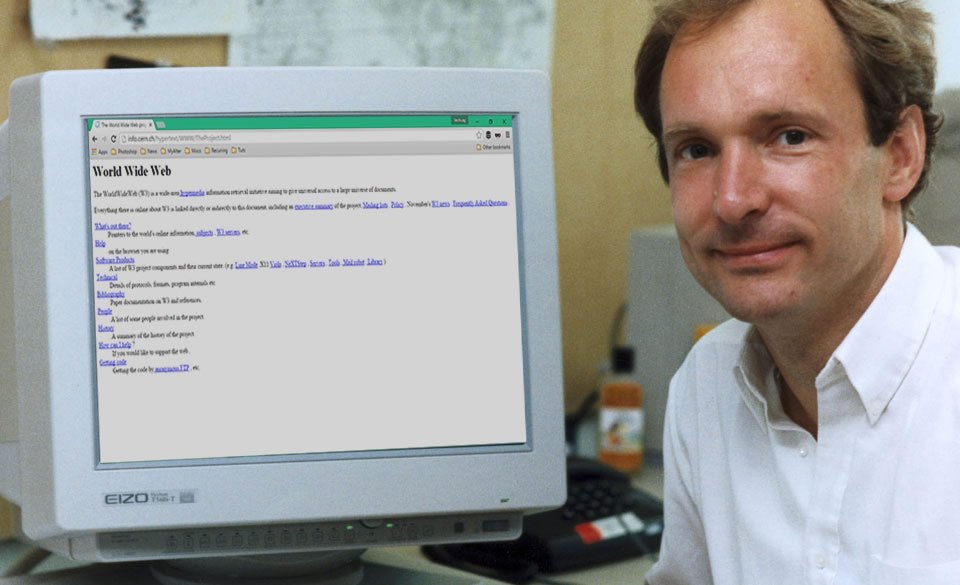
The story of websites begins with British computer scientist Tim Berners-Lee, who created the first-ever website in 1991 while working at CERN, the European Organization for Nuclear Research. His goal was to simplify information sharing among scientists by linking documents across different computers using hypertext. The first website, hosted at info.cern.ch, explained the World Wide Web project and how users could access documents via a browser. It was built using basic HTML and ran on Berners-Lee’s NeXT computer, marking the dawn of a new digital era.


Early websites were static and text-heavy, composed entirely of HTML without any styling, interactivity, or multimedia. These pages lacked visual design and were limited to simple hyperlinks and plain formatting. There were no images, no animations, and no dynamic content—just raw information displayed in a linear format.

Tim Berners-Lee

Challenges of the Early Web

Browsing the web in the 1990s was far from seamless. Most users connected via dial-up modems, which were notoriously slow and unstable. A typical connection involved waiting through a series of screeching tones as the modem negotiated access, followed by sluggish page loads and frequent disconnections. Accessing these websites required specialized software and patience.


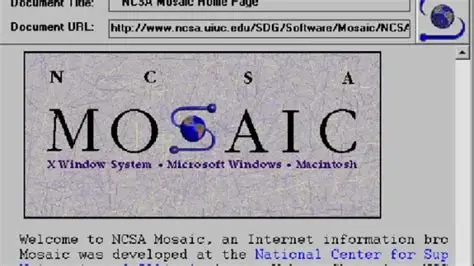
Mosaic, released in 1993 by the National Center for Supercomputing Applications, was the first graphical browser to gain widespread popularity. It allowed users to view images in-line with text, a revolutionary feature at the time. Mosaic paved the way for future browsers and helped popularize the internet among the general public.


Despite these limitations, the early web sparked a wave of innovation and curiosity. It laid the groundwork for the dynamic, user-centric websites we know today.

Old dial-up modem
Dial-Up Modem
Mosaic browser interface
Mosaic Browser (1993)